

What does it take to make smarter markdown decisions without sacrificing margins?
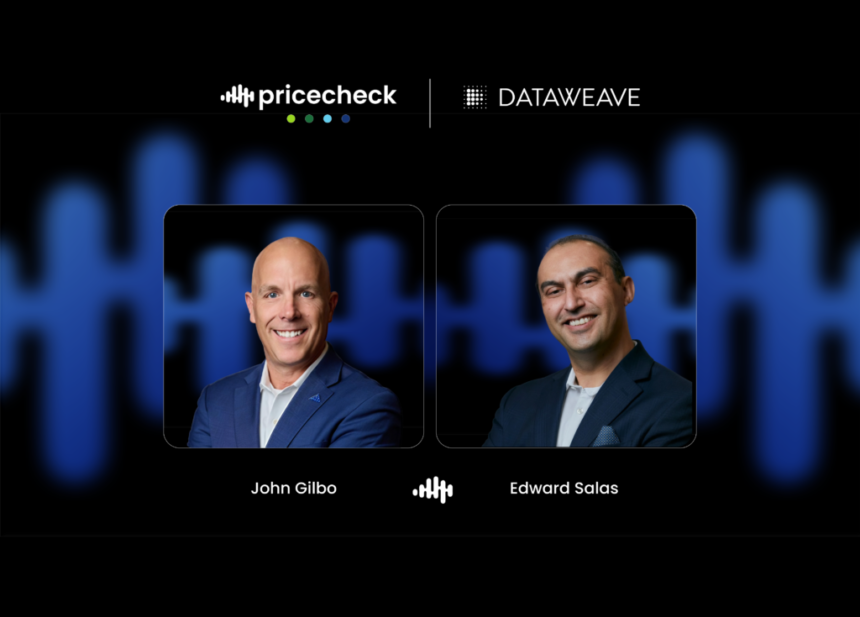
In this special joint podcast episode, John Gilbo from Quicklizard and Eddy Salas, SVP of Retail Strategy and Business Analytics at DataWeave, discuss the challenges of retail markdowns and how data and AI can help retailers rethink their approach. From choosing the right time to reduce prices and adapting markdowns to local demand to using predictive insights and human judgment, they explore how retailers can clear excess inventory more effectively while maximizing profitability.
John Gilbo
Hey, awesome. good to connect with everybody. We’re doing a special joint podcast today. I’m John with Quicklizard and we host our own PriceCheck podcast and I’m here with Eddie. Eddie, go ahead and introduce yourself if you don’t.
Eddy Salas
Mm-hmm.
Eddy Salas
Yeah, Eddie Solas. I work with Dataweave Senior Vice President of Retail Strategy and Business Analytics. And you know, we also host the podcast, The Price Point as well. So it’s good to be able to bring the price point and the price check here together for for this joint for this joint podcast.
John Gilbo
Awesome. And and for folks out there, Eddie and I go back quite a long time, both grocery guys at heart and have been working together for lots of lots of years. So it’s great to get connected today.
Eddy Salas
Ha ha.
Eddy Salas
You got you you gotta love the madness of being in retail for as long as we have. See we’ve seen we’ve seen it all, we saw we keep on seeing it all.
John Gilbo
Yeah. Yeah. Yeah. Especially coming into right now holiday timing’s coming up and you know it’s a it’s a very busy time. So it is madness is a good word for it. speaking of madness, we’re here to talk a little bit about markdowns. one of the topics for us and and just a level set. Eddie, w when you think of markdown, what do you think of? What it what comes to mind just to keep the that data definition in in place for everyone.
Eddy Salas
Yeah, yeah.
Eddy Salas
Right.
Eddy Salas
Yeah, I think, you know, for me, the broader definition of a markdown are essentially items that are coming out of the set or items where you actually maybe, you know, too heavy on inventory. it could be something as simple as I may have some planogram changes and I’m I’m changing out assortment. So the products that are coming out of the set, you know, I need to be able to you know get them out in an appropriate time so that new products that’s replacing them get in there. it could also mean about after events.
you know, after holiday events, I’m high on inventory. I need to kind of get out of some of those respective products. So it’s really about clearancing and and how you optimize that. It’s not about sale and and promotions. And there tends to be, you know, kind of this you know, overlap. You know, a lot of people think markdowns are promotions and promotions are markdowns, but for at least for the sake of this conversation, we’re really talking about the assortment side of things and and how we kind of clear through some of those items.
John Gilbo
Awesome. Yeah. And I think a lot of the questions that we’ll be answering will we’ll go into it with that mindset in place to help help ensure that’s what we cover. you know, and start off with a with a quick question for you and and thinking about this. You you talked about when in the seasonality, but that timing component of of a markdown margin margin impact of that. How have you seen that played out in your career?
Eddy Salas
Mm-hmm.
Eddy Salas
Mm-hmm.
Eddy Salas
You know, it’s it’s interesting. I’ve I’ve I’ve seen just about everything. And one of the commonalities that I’ve actually seen is this assumption of if I if I condense my markdown time frame, I actually reduce my markdowns. And and the reality is that i it’s counterfactual. You you know, the the experience that I’ve seen is the shorter duration time frame that you have
the deeper cuts you’re actually going to need to be able to accelerate that volume, and the higher the higher markdowns you’re effectively going to take. So the the the question really becomes if if if if I have the ability to extend my markdown time frame, you you know, why not necessarily play that? So instead of taking a a short-term deep markdown, let me take a longer term you know, less magnitude type markdown. and I think that’s really where
John Gilbo
Yeah.
John Gilbo
Yeah. Shallower. Exactly. Yeah.
Eddy Salas
Exactly. I I think that’s where the big play is. You know, and I’ve I’ve constantly seen, so if I think about something like planograms, you know, if you already know what your global discontinued are, there’s no reason why you can’t start the markdowns even prior to your planogram generations being complete with your with your next ones. now the challenge is there’s a you know, how do you, you know, how do you read that? How do you interpret that? And and I think that’s really where AI now starts kind of playing into it. when you start taking a look at this large amount of data.
in how you really, you know, optimize it from a from a timing perspective. And and I’m I’m sure you’ve kind of seen a lot of the same thing as well.
John Gilbo
Yeah, and I was gonna say the timing, the the timing also can be very different depending on, you know, we we like to lump things into buckets and say, Hey, all of these SKUs, you know, it’s easier to say that all of these skews should start on November first or December first, or you know, keep it for all of my stores will start November first. And I know that’s the timing
Eddy Salas
Mm-hmm.
John Gilbo
that flexibility, that willingness to open it up can really and and use data to derive when the timing should hit, really yields the best in terms of revenue, margin, and sell through for us. So yeah, a hundred percent.
Eddy Salas
Yeah, and I mean there are gonna be times where, you know, and this is where we want to be smart about things, right? If I if I have closed dated products, if I if I have something in dairy, for example, yeah, I’d I definitely want to be able to kind of take a look at a at a shorter markdown window. as opposed because I won’t be able to, you know, I can’t have really kind of those products, you know, extended over time. you know, if some of my planogram changes, you know, I mean and it may not necessarily be a global discontinued
it may be items that I’m coming, you I’m taking out of of certain stores but keeping it others. Well, I I don’t know the I can’t optimize the time frame until I at least know what stores it’s actually coming out of. So, you know, I think I think there’s really kind of two layers as we start talking about as as we start talking about how you optimize the price. One I think is really more, you know, kind of a standard operating procedure layer. If I if I know I have global discontinues, let me go ahead and start them now. If I’ve got X items, then I’ve got to wait till you know planogram changes.
if I’ve got, you know, you know, perishable products, I know I’ve got a shorter time frame. I think really where AI now starts to come into play is even optimize on top of that. All right. So yeah, I may have a global discontinued. If you know, do I do I need a 12-week window? What is that what does my data say? You know, and and do I potentially only need a six-week window? Do I potentially need an eight-week window? those are things we probably want to consider. Now you made a you made an interesting comment about lumping.
John Gilbo
Hundred percent.
Eddy Salas
Right. And hey, we tend to you know group things together like November first, November third. in the same sort of manner, I mean, what do you think about low you know, nationalized price, you know, in in in in clearances or markdowns associated with a lumping strategy that that you’re saying, hey, all stars are going to twenty percent on this particular day? Is is is is that the right approach?
John Gilbo
Yeah. Yeah. And in my case, my experience and and the work I’ve done personally as well as with others, it I think it’s a a crawl walk run on what you’re what you can do today, what the willingness inside your four walls and your customers are open to. But the more granular you can go, the more regional, the more local, the more SKU level.
Eddy Salas
Mm-hmm.
John Gilbo
you really do not only hit the right price points for your clients, but it it really shows up in your margin line. Back to school is always a good one. we have different start dates and different you know key weeks by region. In the south we start early early August in the northeast it’s later. Our sell through windows are very different. Winter gear, you know there’s a lot there’s a lot of seasonal products out there that
sell differently, shopping patterns are different throughout the year. And if we if we lump them all together, we’re inherently going to be managing by averages and and lose out on some value there. Yeah.
Eddy Salas
Yeah, you know, one of the things that we’ve seen, at least on, you know, on the on the on the data we perspective from a from a you know from a market side of things is there there’s a lot of localized pricing that’s going on, which which makes a lot of sense. I mean, I think you know, you know, you have these notions of of price zones and ad zones that that are that are typically out there. and and we see that with a lot of our data, but even when you start talking about markdowns, it even gets even more localized than that.
John Gilbo
Yeah.
Eddy Salas
And I think a big part of that is is really the the different demand signals that may be at play. You know, I may have a high volume store that may turn, you know, let’s use back to school as a great example of this, right? They they may have a lot of high turn on back to school products. Whereas I may have a store five, ten miles down the road that may not necessarily kind of get that same traffic. So in in that regard,
you know, simple logic would tell me that the high volume store probably needs a less, you know, a less magni smaller markdown rate as opposed to one that doesn’t doesn’t necessarily have that demand. look I’m a big data guy, so I think a lot of it goes down to that granularity. You know, how do I how do I take a look at the buy store, buy item in in all the history and the volume kind of associated with it.
Be able to make that right decision. And yeah, you can definitely set up processes associated with it. I mean, I’d love to be able to set up agents to be able to effectively kind of tell me, all right, yeah, I’ve I’ve got all of these, I’ve got all of these markdowns in play. You know, at what point do I do I start the markdown at what store during what particular time frame? you know.
you can talk as simple as an event and and there is some complexity from an event perspective, but if I think of assortment changes and planogram changes, I mean you may have fifty, sixty categories, you know, every week on rotation that’s going through some type of, you know, reset. and then when you cross that by X number of stores by X number of items that are potentially coming out, I mean you you you start seeing this you know, you’re your
data side of things really exponentially grow. And and again, that’s where the AI, I think that’s really where the AI power kind of comes into play. Let me help with the timing. Let me help with the localized aspect of it. And do you I mean, do you also start bringing in other signals, right? Do we start bringing in competitive side of things? You know, what’s competition doing? and and does that provide a signal for us to be able to potentially take a look at? So it it it’s fascinating you know when when you start kind of taking a step back and really understand
John Gilbo
Hundred percent.
John Gilbo
Yeah.
Eddy Salas
You know, i i i markdowns sound pretty simple, but there there’s a lot of complexity and I’ve always I’ve always said pricing is a simple complexity. You can make it as simple as you like or if you you can make it as complex as you like.
John Gilbo
Yeah, one thing I found is is when you start getting more granular with Markdown and more localized and and you you you not only execute at that lower level, but you’re starting to get that data. You can leverage that data for for upstream.
Eddy Salas
Yeah, yeah.
John Gilbo
processes, right? Like your example, if I’m marking down you know, time and time again in one location for one set of categories heavier than a location five, six, ten miles away, do we do we continue to load up that store with that many units? Do we think about maybe skew ration rationalization or or investing in another category? So getting that low lower level of of execution can then provide data at a lower level for us and then to then bring back to the group.
Eddy Salas
Mm-hmm.
Eddy Salas
Yeah. Yeah, yeah. And I think, you know, to that point, when you when you kind of get down to that level of granularity, simple reporting of the numbers and simple analysis of the numbers really kind of go by the wayside. It it it’s too much data, it’s too much inherent data to to understand trends, to be able to make recommendations both downstream and upstream.
John Gilbo
You you mentioned go ahead, sorry.
Eddy Salas
And I you know, where AI is really kind of helping us a lot, you know, you know, we we developed solutions where we’re we’re kind of going beyond reporting at data. We’ve been and start taking a look at really predictive analytics. All right. And and predictive analytics is is is is ripe for you know anything from pricing to assortment to you know just about anything under the kind of the retail umbrella, but but specifically talking about markdowns.
You know, we talked about the the exponentiality of of the data that’s out there if I’m if I’m at that store localized level. How do I go beyond just basic analysis and reporting to really leveraging models and and really getting into kind of these predictive forecasts? Let me let me understand what the demand forecast is. and that’s really where introducing other signals that kind of come into play and leveraging kind of that power.
you know, of of of AI. you know, it’s a A AI is is is is kind of interesting when you when you kinda take a look at it. There’s I’ve always believed there’s two approaches to AI, a very top-down approach or a very bottom-up approach. I’ve seen a lot of organizations look at it from a very top-down approach to say, hey, we’re gonna go and implement AI. the challenge is is okay, that that’s great to say, but where are you gonna do it? The the better example is is how do I leverage AI from the foundation up?
Right. If I know operationally where I can play and and leverage it, predictive analytics, localized pricing, you know, being able to to do the timing, when I create solutions and and build agents and AI around that, that’s really when you start getting into foundational type of analysis where you can really scale these things up.
John Gilbo
You you mentioned a little bit on on where you’ve seen some things work. Have you seen where those predictive models have gotten it wrong, where you’ve where you’ve seen some folks struggle with it or just flat out had a had a challenge for you?
Eddy Salas
Yeah, and and this is where you’ve got to this is where you’ve always got to triangulate things as well. one of my former mentors always told me, you know, don’t don’t take don’t take the results at face value. You know, look at it from look at it from different angles and and make sure it actually makes sense. So while yes you can definitely leverage, you know, AI to create a lot of these predictions and models, you still gotta have this
common sense aspect to say, does that really make sense? So there’s definitely a verification and validation. It’s it’s it’s it’s almost something like a human on the loop where to be able to provide that, right? So, you know, instead of looking at AI as a replacement of of humans to do the work, it’s how do you actually give someone
more time to be able to, you know, kind of kind of do more and analyze more. All right. So let you know, let me create all these different recommendations and let have someone, you know, come in and take a look at that. Hey, does that make sense? And and and really start being kind of that decision point. to be able to say, yes, that looks good. Let’s go ahead and and kind of put that into play. That’s the synergies between the two. I I’ve I’ve I’ve never seen AI as a replacement of someone. I’ve always seen AI as an empowerment of someone.
John Gilbo
Yeah.
Eddy Salas
to be able to help with decisions, to be able to help with analysis and total.
John Gilbo
Yeah, I use the term allows you to be more strategic, more analytical, takes takes away a lot of the manual work, y you know, the the things we used to do to build files and connect and integrate and and then again smarter strategies. I’ve also seen it before where where we’ve I’ve had use cases where we’ve said, Hey, let’s let’s run the model.
Eddy Salas
Yeah, yeah.
Eddy Salas
Mm-hmm.
John Gilbo
run unconstrained with the output for price points, no size relationships, no ending digits. And we let a few of those go and we we pretty much heard it quickly after when it hit the shelf from not only employees but customers. it it was not it was not good. So y you know, we learned from that pretty quickly.
Eddy Salas
Yeah.
Eddy Salas
And yeah, and and and and this is that’s kind of where yeah, I keep going back to the the there’s an importance and an elegance to kind of like this bottom-up approach to AI. Right? Like like if I if I let AI on markdowns, what what AI is probably gonna be telling me to do is buy store, buy item, buy day, here’s the price that you actually need to move to. Right? And and I guarantee you the math and the logic and the model probably
John Gilbo
Yeah.
Eddy Salas
all makes sense. Yeah, that that that’s how I’m gonna reduce my markdowns. Now on the flip side is what happens if I don’t have E yeah, what happens if I don’t have ESLs? Yeah. Exactly. Yeah, if I don’t have ESLs, okay, do I have someone changing up the tags every single day? So now n now I’ve I’ve converted my potential markdown savings that I would have gotten from that. Now I’ve added that to labor’s, you know
John Gilbo
If you sent pricing if you sent pricing every day. Yeah. If you sent pricing every day in your past life or my past life. Yeah. Yeah.
John Gilbo
Labor.
Eddy Salas
aspect of it, right? So so there that that’s why I don’t think you can ever have the machine, you know, be the end all be all and just and run unconstrained. There has to be that human on the loop. There’s gotta be that constraint, that decision maker, to be able to take the great results in in in and really isolate if, you know, does that make sense before actually kind of pushing those things forward?
John Gilbo
Yeah.
John Gilbo
Yeah, I think those learnings are are key as you think about and maybe maybe that’s another question. How do you take those learnings to apply them to future markdowns like all of these, whether it’s the models, whether it’s the just the logic or the you know, the the human learnings.
Eddy Salas
Yeah, I think a lot of it is you you want to create a closed loop system. And you know, we we’ve experienced that a closed loop system is is really optimal to to be able to kind of help with learning. You know, one of the things that we do with data we is is is really kind of product matching, right? How you know if I if I think a look at think of a private label, right? You know, how do how do we it’s not a UPC to UPC match, but where, you know, where can we use logic to be able to map these products? Well, if I don’t have a knowledge graph, well, my my first round of of
recommendations probably they’re going to be directionally correct. But as I start getting more feedback, as I start kind of understanding it more and more, and the knowledge graph becomes smarter and smarter and smarter, it gets more and refined, it gets more efficient, it gets smarter as we as we kind of go through it. I think markdowns kind of work the same way. the best case example of it is, you know, I may have if if I’m looking at markdown event, if I take the look like a category like wine, right?
typically goes through a reset, you know, once or twice a year. Okay, well, what did I learn? Do, you know, if if I if I have a fall reset, does that have different nuances and different cadences than a spring reset does? and do I need to take that into account? do longer timeframes or shorter timeframes work? What’s the depth that potentially works? you know, are there clusters of stores that tend to, you know, act very similar?
To associate it with this. There’s, you know, each iterative event should be a learning. and and I I almost equate it to school. You know, in if I if I take a look at math, I’m I’m not I’m not automatically jumping into pre-calculus and calculus without having a good understanding of geometry and algebra. All right. I’m not, you know, I’m not getting into differential equations unless I understand calculus, right? So so you’ve gotta have that continuous learning. AI.
John Gilbo
Yeah.
John Gilbo
So you can have that too.
Eddy Salas
works the same way. you wanna be able to continue to train, you wanna be able to continue to reflect, to be able to get better outputs and better recommendations and reduce that risk of of of any type of hallucinating that may be going.
John Gilbo
Yeah. Yeah, it’s a g it’s a good point. I’ve I’ve also found location in store, location on your site. You talked about shallow markdowns early. in some cases we had the ability to pull product out to a location, shallow markdown, just made people aware of it. And you talk about those learnings, those variables. I think you you know if you can can contain that data point, bring it back, anything we can do to to let the models run more intelligently with that learning is great.
Eddy Salas
Mm-hmm.
Eddy Salas
Yeah.
Eddy Salas
And the other part of it is, is, you know, are there other aspects of AI that that can potentially help with your markdowns? And and you know, one that that comes to me, that comes top of mind to me is can you use AEO, you know, answer engine optimization? in
John Gilbo
yeah.
John Gilbo
Explain that a little bit, what that what that means. We explained markdown, but why don’t you explain that a little bit if you don’t mind?
Eddy Salas
Yeah, so AEO, the best way to describe it is so we we’ve we’ve got all these all these platforms. You’ve got Perplexity, you’ve got Claude, you’ve got Chat GPT. Well, these are these are now avenues. So these become essentially your, you know, for lack of a better term, these are your augmented search engines now, right? So instead of looking for specific searches, you’re you’re now answering questions. So it’s so answering answer engine optimization. and a lot of it is kind of based upon the content.
that you know brand.com and retailers actually have on their on their respective sites. So if I go into a Claude, for example, and say, you know, what are what are the best brands of yogurts if I am lactose intolerant? Right? Instead of just going into a retailer website and give me, give me your lactose intolerant yogurts, I’m asking the question of of Claude that says, give me the best brands.
And let me see what brands actually come up. Now, the interesting thing is if I go to Chat GPT and ask that same question, that may be something completely different. Yeah, we’ve we’ve seen it, you know, it’s you know, a lot of the research that we’ve done internally is it’s really based upon your content quality, how clean that content quality is, how much how many tokens are actually being used to be able to go and find that type of information.
John Gilbo
Yeah.
Eddy Salas
and a lot of you know a lot of brands are now starting to put a lot of emphasis on cleaning up content quality to be able to you know maximize their exposure on AEO on on some of these respective platforms. how does that relate to markdowns? Well, you know, the the trick about markdowns is how do you get out of the product effectively? How do you land that plane? and if I’m not getting enough velocity onto the product, can AEO
you know, play into it. You know, if you know, how how can I highlight, hey, I’ve I’ve got these closeout items that are really good price at a store that’s really close to you that you can go out and get. I don’t think we’ve really tapped into that quite yet, but I do think that there’s you know there’s an avenue there to be able to leverage AEO to be able to help you know accelerate the the you know the the the volume
to to clear to clear out of the product before that set time frame or even during the holiday time frame. that’s I I think that’s untapped potential to to potentially look into, but but definitely an exciting universe. AEO is is opening up a lot of different avenues. I think Markdowns is definitely gonna be one of them that that we can take a look at.
John Gilbo
Love it.
John Gilbo
Yeah, I think I think it goes back to again the the ability now with big data to integrate those data sets, feed them back to to AEO and expose that to to the customers of that search engine for that. One last question I I asked Matt Schiffman, our our head of commercial AI, the same the same question at the end. What’s your go to karaoke song?
Eddy Salas
Yeah.
John Gilbo
If it’s Friday night at ten thirty at the Sallas house, what do you what are you doing for your song? What do you got?
Eddy Salas
You know, all right. So I am, you know, for anyone who follows me on LinkedIn, I’ve I’ve I’ve kind of, you know, one one of the big I am a very big Rush fan. I I actually got to meet them. I I literally got to meet them like two weeks ago and it was probably you know, bucket list checked off, right? So you know, yes, I I could I could easily name a I could easily name kind of one of their one of their top songs like
John Gilbo
All right, there we go.
John Gilbo
Yeah, nice.
John Gilbo
Tom Sawyer or yeah yeah.
Eddy Salas
like Tom Sawyer or or or you know, but Limelight of course is one of my favorite songs, but my my my all time my penultimate, you know, song is Presto from from the Presto album. It’s just got a really cool story. It’s got a really cool rhythm. whenever whenever I go running or if if I if I if I do karaoke, like trust me, you do not want to hear me sing, it it it’s it’s presto. I I absolutely love that song.
John Gilbo
I love it.
John Gilbo
All right. I’m gonna have to listen to that again. It’s it’s I’m drawing a blank. Well, that’s good. yeah. you know, I think of some journey songs in there. I think of some energy. I I gave a different one for Matt and I was thinking about it. I love some of the classic Michael Michael Jackson songs too. You know, Billy Jean. So and I think it for me it can change by the day and the mood. That’s why I like asking the question. Well, thank you. Thank you, Eddie. Great.
Eddy Salas
Same question for you now. Yeah, you can’t you y y you you can’t get away just asking me this.
Eddy Salas
Nice, nice.
Eddy Salas
Yeah.
John Gilbo
Great topics, I think we covered and and a lot I learned today. So thank you very much. Looking forward to hearing more. Love it. Thank you.
Eddy Salas
Yeah, let’s let’s definitely do this again. All right, we’ll see ya.