


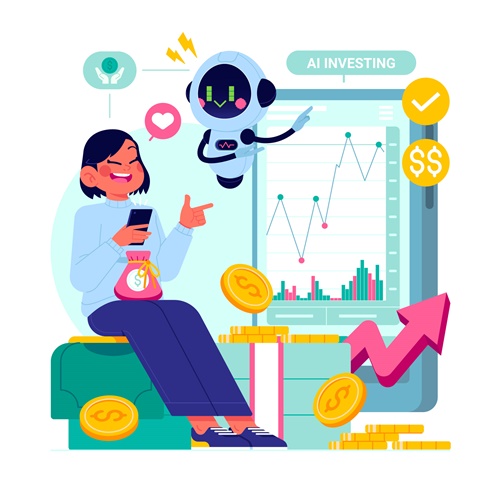
The financial landscape for Non-Resident Indians (NRIs) is undergoing a seismic shift. Gone are the days of manual currency tracking and reactive investment strategies. We are entering the era of the AI Financial Autopilot, where sophisticated machine learning algorithms handle the complexities of multi-currency environments, tax compliance, and global market volatility.
Decoding Cross-Border Consumer Behavior
At the heart of this revolution is cross-border consumer behavior analysis. By utilizing fintech preference mapping techniques, platforms can now analyze millions of data points to understand how an NRI in San Francisco differs in spending and saving from one in Dubai.
Traditional remittance was once a linear “send and save” transaction. Today, AI-driven fintech tools have transformed this into a dynamic ecosystem. These tools use predictive transaction data to identify the optimal moment for currency exchange, often automating the transfer when rates hit a pre-set threshold, effectively putting the user’s capital on autopilot.
Predictive Wealth Management Research in Action
The integration of predictive wealth management research allows NRIs to move beyond traditional NRE/NRO fixed deposits. AI models now assess global risk appetite, local inflation rates in the country of residence, and real estate trends in India to suggest a balanced, hyper-personalized portfolio.
Case Study 1: Optimizing Remittance Flows in the UAE
The Profile: Rajesh, a software architect in Dubai, frequently sends money home to Kerala for property investments and family maintenance. The Challenge: Fluctuating exchange rates and high transaction fees often eroded 3-5% of his total transfer value annually. The AI Solution: Rajesh switched to an AI-enabled platform that utilizes machine learning in remittance forecasting. The system analyzed historical dirham-to-rupee trends and Rajesh’s monthly liquidity needs. The Result: The “Autopilot” feature executed transfers only during 48-hour windows of peak exchange value. Over 12 months, Rajesh saved $4,200 in exchange losses—capital that was automatically diverted into a diversified Indian mutual fund portfolio.
Case Study 2: Rebalancing Portfolios for US-Based Tech Professionals
The Profile: Anaya, a Silicon Valley executive, held significant assets in both US tech stocks and Indian ancestral property. The Challenge: Her portfolio was heavily “home-biased” toward the US, leaving her vulnerable to USD volatility and missing out on India’s emerging manufacturing sector growth. The AI Solution: Anaya utilized a wealth-tech platform featuring AI-driven transaction data mapping. The tool analyzed her global tax liability (under FATCA) and identified an overweight position in US equities. The Result: The AI suggested a structured “glide path” to liquidate specific US holdings and reinvest in Indian ESG (Environmental, Social, and Governance) funds. This automated rebalancing reduced her portfolio volatility by 15% while maintaining a consistent 12% CAGR across both geographies.
The Shift in NRI Investment Spending Patterns
We are seeing a marked change in NRI investment spending patterns. AI has revealed that younger NRIs are moving away from physical gold and towards “Digital Gold” and REITs (Real Estate Investment Trusts). This shift is driven by the desire for liquidity and the ease of management provided by automated cross-border financial planning.
By leveraging fintech preference mapping, banks can now predict when an NRI might need a home loan in India or when they are likely to seek high-yield private equity opportunities.
Conclusion: The New Standard of Living
The AI Financial Autopilot is not just about making more money; it’s about reclaiming time. For the modern NRI, managing wealth across borders is a full-time job. By outsourcing the analytical heavy lifting to AI-driven fintech tools, investors can ensure their wealth is working as hard as they are, regardless of time zones or borders.
As NRI fintech trends 2026 continue to evolve, the distinction between “local” and “international” finance will vanish, replaced by a seamless, predictive, and truly global financial identity.